
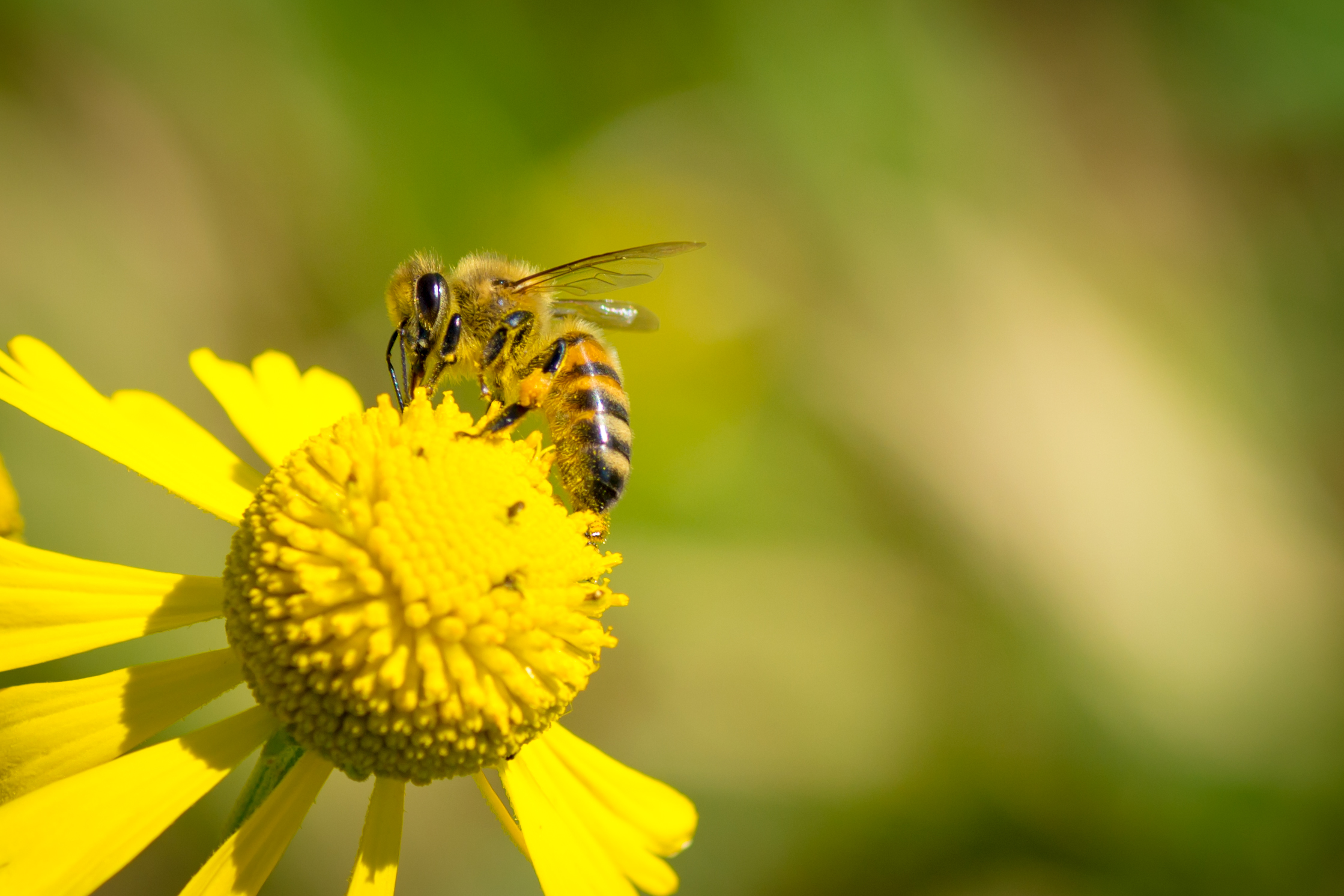
 Honey bees are the insect species apis mellifera, also known as the western honey bee. They are not native to North America, but have been kept in hives in North America since the 1600s, when European colonizers brought them from England to Jamestown, Virginia.
Today, the western honey bee is both a managed species and a feral one—besides the colonies kept by beekeepers, honey bees also live in the wild. They build nests in cavities in trees and sometimes in the walls of buildings and other enclosed spaces.
Beekeeping isn’t just a hobby, it is an agribusiness—a big-scale agricultural activity. As of April 1, 2023, there were 2.71 million managed honey bee colonies in the United States (USDA, August 1, 2023). Each year, commercial beekeepers transport about two thirds of those colonies (1.8 million) on trucks to farms and orchards to pollinate crops (American Beekeeping Federation).
Every February, a dominant share of U.S. honey bee colonies go to the California almond orchards. Almond growers pay to have two colonies per acre pollinate their trees for several weeks. The bee colonies travel from as far away as Florida to do that work. After they pollinate almond trees, many are moved on to other crops in other states. In our own area, there are commercial beekeepers who rent colonies to farmers and orchard keepers to pollinate fruit and vegetables.
Hobbyist beekeepers, like most members of the Montgomery County Beekeepers Association, keep small numbers of hives to harvest honey, and to augment the pollination work of native bees and other pollinators.